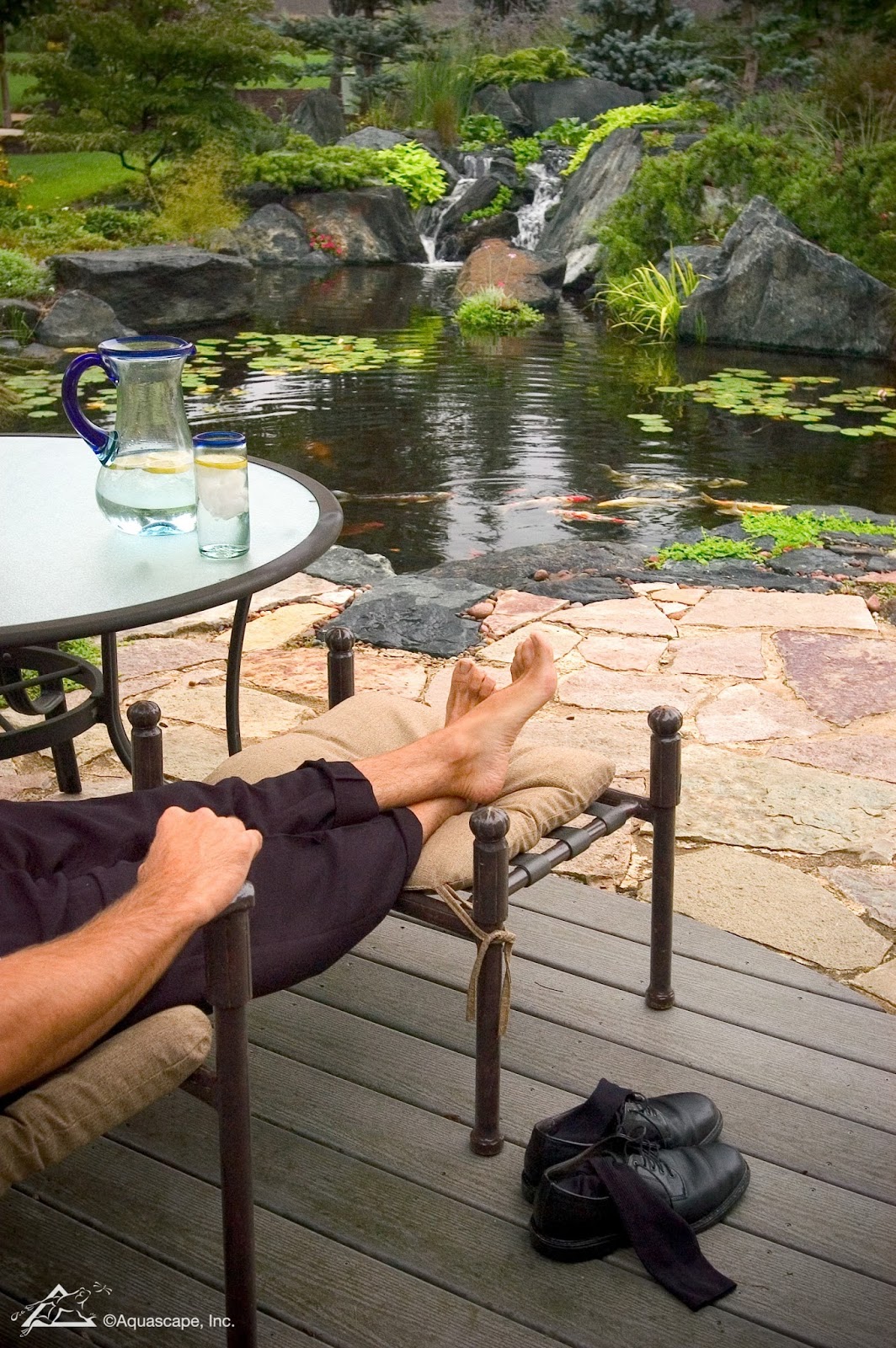
Showing posts with label backyard pond. Show all posts

Thursday, April 26, 2018

When Can You Start Constructing My Backyard (Koi/Ecosystem) Pond?

So you know what the process for constructing a backyard pond is. You know how long the construction of a backyard pond is and you also know what kind of mess there is when constructing a backyard pond.  So what is left?  Well, once a client has reached this point the next question they will often ask is, "when can you start?"

The answer to this question will obviously vary from location to location, but for the purpose of this blog let's focus on the Midwest in particular.


The Construction Season

Once winter has passed and the spring season has begun the weather can be very touch an go when it comes to available construction days.  In the Midwest, Michigan in particular, has an average frost depth of 42 inches.  As the frost is thawing it will typically render most yards unworkable. It will vary from year to year, but the generally a construction project that is started to early generates much more of a mess and will often carry a higher clean up charge than a project started after the frost has left the ground.
During the thaw the Midwest will also see quite a bit of rain to add to the saturated soils.  For this reason you will see many Koi pond construction companies focus on pond maintenance and cleaning from mid-March to mid-May.  As they complete the pond cleanings and openings the pond construction season will begin in early to mid-May in the Midwest.

First Come First Serve

There are many different ways that contractors will get clients that are ready to enter a contract scheduled.  A very common way that pond contractors will schedule clients is, first come first serve like many businesses in the service industry.  Typically pond contractors are scheduling backyard pond projects as they are coming in.  Spring and Fall will often be the busiest flow of new business for Midwest pond contractors.  The Summer months will be ups and down as many Midwestern families are on vacation and not thinking about their yards as much.  The Winter is by far the slowest time of the year for a Midwest pond contractor, but a great time for the potential client to have their full attention.  While it is common for pond contractors to have an open calendar come Spring, many of the highly desired pond contractors will not.  If you are close to living the pond lifestyle and know that a company has lots of high ratings and great reviews reach out to them in the Fall or Winter to get on their Spring calendar. 

Down Payment

A first come first serve contractor will often require some sort of monetary commitment from a client that would like to reserve a spot on their calendar.  While the down payment will vary from company to company it would be good to expect a range of 10 to 50 percent of the total project to be the requested down payment.  A 10 to 30 percent down payment is fairly common with pond projects $10,000 or more, while a 30 to 50% down payment is more common with a pond project below $10,000.  A good pond contractor will have a detailed description of their payment options available upon request, have a tentative date for the pond project and give frequent updates on the calendar changes from weather or other contractor related issues.

Business image created by Pressfoto - Freepik.com
Calendar

With the construction season typically ranging from May thru October in the Midwest it is important to discuss how the contractor handles the scheduling calendar.  It is not uncommon to find landscape an even some pond contractors that are determined to fit in as much work as possible while the weather is good.  A contractor like this will generally work long days and long weeks to make their calendar work.  Contractors based on total volume of projects completed can be very effective and efficient, but are also one lost worker or one lost piece of equipment away from a catastrophe. Before you finalize your agreement to have a Koi pond constructed at your home talk with the contractor and see how they schedule work.  A great contractor will tell you they have so many man hours available per week and that they schedule their projects based on those numbers.  This same contractor will often spread projects out and not overlap them in case there is an unforeseen issue or addition to the ecosystem pond construction.  Instead of the call about pushing the pond project back a client will often get a request to move the backyard pond project up on the calendar.

It can certainly be challenging for a client to get their backyard (Koi/ecosystem) pond construction started depending on the contractor that they choose.  That great contractor will put the clients mind at ease with great consistent communication even if the construction is months or weeks away.

Owning a pond, waterfall or fountain certainly doesn't need to be difficult, so be sure to contact us to see what we can do to educate you and set your mind at ease.  For more educational information be sure to visit www.poseidonponds.com or for more inspiration visit our Facebook page and start following us!


Appreciatively Yours,
Cory Mann
"Poseidon Pond Mann"

Monday, April 16, 2018

What Kind Of Mess Is Made During A Backyard (Koi/Ecosystem) Pond Construction?


When any potential client begins the process of seeking out a contractor to hire for their project they will always be thinking about the mess that will be created during the construction, whether they say it or not. Builders and roofers will have lots of waste material, plumbers will likely have a watery mess, painters will have spills and landscapers will cause lawn damage of some sort. All contractors will generate some sort of a mess, so why is it such a big deal?

Any homeowner would be able to tell you that their home is their sanctuary, the place they feel the most comfortable and safe. The act of inviting a contractor into their home is stressful and the fear of a big mess makes matters worse. All too many times I have heard stories from clients that talked about other contractors and how great their work was, but they would never work with them again because they trashed their home and didn't clean up after themselves. If you are looking for a contractor to do work in or on your property, don't be shy, ask them what they plan to do with the mess generated. There are many messes in the contractor world, but since I am in the landscaping industry I will focus on the mess generated by a landscape project, specifically the pond construction mess.

You are currently reading the third part of my series on backyard pond construction, click the links below to catch up on the first two blogs:

-What is the construction process for a backyard (Koi/ecosystem) pond?

-How long does it take to construct a backyard (Koi/ecosystem) pond?

What causes a mess during backyard pond construction?

This topic seems self explanatory I am sure, but to have a deeper look at what causes the mess can help reduce the anxiety a client may have about the project. A contractor's goal should focus on the needs of the client and painting a clear picture of what to expect can do just that, so let's look at what might cause a mess during an ecosystem pond build.
Site Prepartation


Site Preparation- Before the actual pond construction can begin the site needs to be cleared/prepped. This process can be the removal of sod, the removal of landscape plants, the removal of mulch, the removal of a deck or patio, etc. Whatever the case the area designated for the new koi pond needs to be prepped and that generates a mess. The removed debris will then need to be either staged on site for removal or removed right away. To remove the debris wheelbarrows or machines are often used. The machines are typically the main contributor to generating a mess by creating ruts in the lawn or dropping small amount of debris from the site to to staging area.

Pond Construction- The site is prepped and now the backyard pond construction begins. The excavation of soil can produce soil clumps, tree roots, rock and other buried materials. The soil is often used within the site for waterfalls or streams, but excess soil will be transported and staged with 
Pond Construction
the prep waste. All other debris is also added to the site prep waste, typically with a machine. During the Koi pond construction other debris will e generated from installing the liner, underlayment, plumbing and equipment. While some of the debris can be recycled, some is destined for the landfill and adds to the staged waste. 

Material Delivery

Material Delivery- With most ecosystem pond builds rocks of varying sizes, soils and even mulch are used for the finished product. The materials needed are often delivered by supporting vendors and are typically not the same location as the pond. The material delivery will either be on the driveway or next to the driveway. This process will either make the driveway dirty or create another area that will need to be repaired. 

Material Transport

Material Transport- This is really part of the site preparation and construction, but it is important to separate it for educational purposes. The transport of materials from the construction site to the the staging area typically generates the biggest mess. Machines moving the materials will create ruts, compress soils and even drop material from time to time. The mess generated is connected directly to the size of the project/amount of materials and the distance from the staging area to the backyard pond construction site.
For all of the above processes there is one major catalyst on the size and scope of the mess generated, and that is simply the WEATHER. Good weather will allow the contractor to finish the construction with minimal damage while bad weather can greatly expand a mess if not reviewed. Pushing through to complete a project after lots of rain can create a significant amount of material transport damage. I have reviewed what causes a mess, so what are some things that can prevent the mess.

What can be done during pond construction to reduce or prevent a mess?

It is simply insane to think that there will not be any mess generated by any contractor let alone a landscaper. If a contractor truly has the clients best interest in mind they will clearly know this and have some sort of plan to reduce or prevent a mess. For a good contractor this process begins early on at the site consultation with the client. A clear plan is developed for where the material is to be delivered and where any debris will be staged for removal. The contractor will need to have a clear picture of the size and scope of the project to determine if the staging area is big enough or if continually debris removal will be required. The contractor then need to determine the best path for the materials to be transported from the staging area to the project location. Witth the path in mind, the contractor will also need to figure out what needs to be moved or protected along the path. The final planning for the path is whether or not a protective barrier (wood sheets or rubber matting) needs to be put down to protect the lawn or garden beds. A good plan is then delivered to the construction team prior to the start of the construction.

For multi-day projects it is very important for the contractor to set aside time to clean up debris and stage it accordingly. Typically a contractor like this will have some select team members break off from the rest of the team at the end of the day to do this. While some materials will be staged till the end of the construction, trash will often be removed from the site daily.

The last preventative measure that a good landscape contractor will have deals with weather. Since the construction occurs outside and the fact that weather can be a catalyst to the mess created it will be a focus to monitor the weather and adjust the plan accordingly. After a big event the contractor will evaluate the site and determine if it is workable and why or why not. They will then keep the client up to date on the restart date. While monitoring the weather the contractor may also switch gears on the project and remove materials to get ahead of a weather event and prevent a slow down in the construction.

What is done about the mess made from the backyard (Koi/ecosystem) pond construction?

The mess has been made, now what? With most contractors it is not the immediate area around the project where the mess is forgotten or left, it's along the path where materials were transported or the staging area. I always expressed to my co-workers that you could build the greatest masterpiece you have ever done, but if you leave the smallest of messes and the client finds it your masterpiece quickly becomes kindergarten art. With a daily clean up at the end of the day a contractor can decrease the odds of missing a mess at the end. A contractor who waits till the end of the project to clean up faces a mountain instead of a hill. They will often be in a rush to meet estimated hours or budget, resulting in far less quality and attention in the clean up. With lots of machine traffic a good contractor will aerate the soil, spread soil if needed and add grass seed. The best way to ensure a good through clean up for any contractor is to have a clean up checklist for their team and hold them accountable to their clean up by requiring the client to sign off on the work. The contractor that treats all of their clients property as if it was their own family members, like a grandmother, will certainly have a clear understanding why a client feels the way the do about their property.

For the final blog in the series focused on the construction of a backyard (Koi/ecosystem) pond I will be exploring the question I often get asked at the site consultation, "When can you start the construction of my backyard (Koi/ecosystem) pond?"

Owning a pond, waterfall or fountain certainly doesn't need to be difficult, so be sure to contact us to see what we can do to educate you and set your mind at ease.  For more educational information be sure to visit www.poseidonponds.com or for more inspiration visit our Facebook page and start following us!


Appreciatively Yours,
Cory Mann
"Poseidon Pond Mann"


Tuesday, April 10, 2018

How Long Does It Take To Construct A Backyard (Koi/Ecosystem) Pond?

Homeowners  research many things when deciding to have a contractor construct something for them.  The act of hiring a contractor and inviting them to your property creates lots of questions.  In the last blog I focused on, "What is the process for constructing a backyard (Koi/Ecosystem) pond?"  While that is one of the top questions potential clients have, they will often want to know how long the process will take at their home.  Many factors play into how long it will take for the construction of a Koi pond.  The process from the last blog can be replicated and providing average time-frames is possible, but it is also important to know what can effect those time-frames.


What takes time when constructing a backyard (Koi/Ecosystem) pond?

In order for me to provide some time-frames lets first look at what takes time when constructing an ecosystem pond. This would be from beginning to end.
  1. Initial call or e-mail- The client has decided to contact the contractor and see if they are a good fit for the project.  It will vary between companies, but the response to the initial contact from the contractor should be within 24 hours.  Really good contractors will be less than 2 hours.  Most responses to the initial contact will be a request for information about the project, possibly pictures and a request to set up a phone consultation with one of the sales team members.  The response call is about 15 minutes and it will usually be less than a week until the phone consultation.
  2. Phone Consultation-  A good contractor will want to have a conversation with a client prior to visiting their home.  The first face to face meeting can often be overwhelming to a client, so having a phone consultation prior to that can build a good rapport and save time.  In some cases the client and the contractor just aren't a good fit for what ever reason and realizing that on the phone is much less stressful than in the backyard. Depending on the project the phone consultation can be a 1/2 hour to 1 hour in length.
  3. Site Consultation-  This is often the first face to face interaction with the client and the contractor.  Unfortunately, the most common site consultation happens with no preliminary contact except for the initial call or e-mail requesting work.  Without the phone consultation the site consultation will often become the dreaded sales pitch almost all potential buyers loathe.  With the phone consultation, the contractor will show up prepared to discuss the issues and wants of the client.  Time will be saved by not having to start from scratch and the contractor and client can get right down to the project/budget that was already discussed on the phone.  A signed agreement with a handshake is much more common with both parties being on the same page from the phone consultation.  A much better consultation then not having a clear picture at the start and a surprising a client with a price they didn't expect.  Depending on the project, a site consultation can be 1 to 2 hours long and can be within 1 week from the phone consultation.  A passionate contractor often spends his or her time getting to know the client better at this consultation.      
  4. Site Preparation/Team Meeting-  Depending on the project, the site preparation and the team meeting may be separate.  A larger project will have a down payment at the site consultation, a second down payment a couple weeks prior to the project start date and the last payment at the final walk through.  Smaller pond projects will often have a down payment at the site consultation and last payment at the final walk through.  Site preparation is a meeting for the sales person, contractor's supervisor and client to review the project agreement, layout the  pond project, discuss delivery of materials/supplies (on-site location), access to the site, time frame and any other questions the client may have.  The site preparation meeting is typically completed in less than 1 hour.  The team meeting will either occur the day of or in some cases the day prior to the start date.  It is very similar to the site preparation, but this time it is with the client, supervisor and the contractor's team that will be constructing the backyard pond.  This meeting is typically about a 1/2 hour with the client and then may be followed with the supervisor and team going more in depth.  As I said before, inviting people on to your property can be overwhelming and if a contractor isn't going the extra mile to reduce that feeling, ask yourself why.       
  5. 20 Step Process-  The construction is the meat and potatoes of the backyard pond project.  No matter the size of the Koi pond, the process is duplicated by the contractor to complete the pond project efficiently and correctly.  Many contractors will have a different method that works best for them.  The process that works best for us can be viewed here.  This is the most important part of hiring a contractor and for more information on what the process for constructing a backyard pond, read the blog on it here.  Believe it or not some ecosystem ponds can be constructed in one day while others can take a month.  They really are dependent on the size and accessibility of the pond project.  A smaller 8' x 11' pond that is approximately 2' deep with a waterfall right on the edge will be 1 to 2 day.  A slightly larger 10' x 14' pond that is approximately 2' deep with the waterfall right on the edge will be 2-3 days.  A much larger pond that is 20' x 30' with multiple waterfalls and a custom intake filtration would be 15-16 days.  The length of the process can easily be established on the phone consultation or in some cases a contractor will have it laid out on their website.  (Click Here To See Our Triton Pond Packages)
  6. Final Walk-through- The construction of the backyard pond has been completed, the supervisor has gone over the system and the client has had some time to experience the pond lifestyle.  The final walk through is with the client, sales person and in the case of some contractors the maintenance supervisor.  In this meeting the client and contractor will discuss any new concerns/questions, maintenance options, and how the client feels the contractor did.  The final walk through will take about 1 hour depending on the client.  A tasty pond side beverage provided by the client can certainly extend this meetings length.  
  7. Other- The following are other things that may require some time for the Koi pond
    project. Larger projects may require more meetings to discuss the progress of the project and are usually less than a 1/2 hour.  Deeper backyard ponds within city limits may require permits. Depending on how quickly the local government processes the permits, the build time may be extended.  In this case the time frame can be a week for approval, to months if a special meeting is required for a very detailed project.  Future visits after the final walk through may also be scheduled to check up on the clients comfort level, but also for marketing.  Pictures of a recently completed pond are never as good as a few months to a year later.  These fun visits are usually less than a 1/2 hour, again tasty beverage are always a factor. 

What could effect the time it takes to construct a backyard (Koi/Ecosystem) pond?

If you hear any contractor say that nothing will effect the time frame it will take to construct your Koi pond, RUN for the hills.  Many things can cause the construction of a backyard pond to take longer than planned.  Let's take a look at some of the factors that may steal time away from the project.
  • Mother Nature- This factor is almost self explanatory.  Weather can stop construction for days and in some cases weeks if the site conditions are drastically effected.  A good contractor will understand this and make it a main focus of communication to the client.  
  • Unforeseen Issues-  This is something that could not be seen on the surface and once the digging has begun and typically increases the excavation and clean up of the site.  It can be a very common issue like irrigation lines or something totally shocking like a mastodon skeleton.  Seriously, a couple construction projects have been shut down for finding rare fossils.  Unforeseen issue factors should be discussed both at the initial site consultation and when they are found.  Quality contractors will provide a price for the necessary adjustments to the project and require a signature to move forward.
  • Project Additions/Changes-  Sometimes the client will want to make changes to the original design of a backyard pond or even make additions.  Be sure additions are discussed with the contractor early on if the contractor hasn't already said that they are comfortable with changes being made.  When additions are made, the contractor must provide a change order contract which requires a signature.  The last thing a client wants is a huge financial surprise at the final payment.
  • Supplies-  This can be a sneaky factor effecting time.  Many pond projects are estimated and accepted months in advance and occasionally there is a supply shortage.  For backyard ponds there may be a rock shortage or if foreign products are used the supply may be held up in customs.  Whatever the case is, a good contractor will be open with their communication about this potential issue.  
While these are unfortunate in many cases, as long as your contractor is open and honest, they can be easily managed and the pond project will eventually go on as planned and finished to the clients satisfaction.   

Owning a pond, waterfall or fountain certainly doesn't need to be difficult, so be sure to contact us to see what we can do to educate you and set your mind at ease.  For more educational information be sure to visit www.poseidonponds.com or for more inspiration visit our Facebook page and start following us!


Appreciatively Yours,
Cory Mann
"Poseidon Pond Mann"


Tuesday, April 3, 2018

What Is The Construction Process For A Backyard (Koi/Ecosystem) Pond?

Having a backyard pond constructed at your home can be a simple or complicated process depending on the size and location.  For this reason, many of our potential clients want to know what our construction process looks like so that they are more comfortable with their decision.  A larger Koi pond will certainly come with more damage to the surrounding areas and take longer to construct.  If we have easy and open access things will be much less complicated than if the area is harder to get to or is tighter.  Regardless of the size and location, the actual construction of the backyard pond follows a step by step process that we follow for each pond installed.

Paint & Plan

The phone conversations, initial consultation and down payment for your new backyard pond have all happened, what's next? With most projects a meeting will be set up two weeks prior to the start date with the client, the salesperson and project supervisor.  At this meeting we will review the original project scope, discuss any possible changes and map out the project with paint in the location where the work is going to be done.  During the "paint and plan" we will also discuss where we will need to stage materials, how we will reach the location of the project (access), how long it will take us, what the process will look like, how we will clean the area up, determine if we need to contact MISS Dig (utility marking), discuss the final meeting, talk about the scheduled date of the project and set up the  next meeting.  Larger projects will have a three payment set up (30%, 30%, 40%) so, this will often be the meeting where the second payment is collected.

Meet The Team 

The day of or the day prior to the start of the project we have another meeting for our clients where they can become acquainted with our team members. During this brief meeting we will walk through the items that were discussed at the "paint and plan" meeting so that all details are addressed and understood.  We understand the stress associated with a pond project and the team meet and greet is a good way to break the ice and build trust.

The Construction Process For A Backyard (Koi/Ecosystem) Pond

As Certified Aquascape Contractors we follow a process for constructing ecosystem ponds that can be duplicated from the smaller style ponds to the much larger versions.  Each and every project can carry its own unique scenario, but solving them comes much easier when operating under a set process.  A kicker in American football has the same exact process when it comes to preparing for a kick. No matter what the conditions are, they never change how they prepare for a kick, just the delivery. Our process is much the same, we follow a step by step process and adapt to the conditions while delivering a unique finished product.  Here is what the 20 step process looks like:


  1. Outline the pond footprint with paint
  2. Place the skimmer and biological filter
  3. Lay out the plumbing
  4. Hook up the biological filter
  5. Excavate the pond
  6. Install the rubber liner and underlayment fabric
  7. Hook up the skimmer and components inside, including the pump
  8. Place rocks and stones in the pond
  9. Position underwater lighting
  10. Wash the rock and stones
  11. Begin filling the pond
  12. Construct the waterfall and stream 
  13. Bring in topsoil for back filling around the biological filter and skimmer if needed
  14. Build retaining wall if needed for the upper waterfall and stream
  15. Tweak waterfall when turned on
  16. Trim excess rubber liner or tuck along the pond edge
  17. Complete the finishing touches like landscaping and adding mulch
  18. Clean up around the pond and areas affected by the construction
  19. Go over the welcome kit, familiarize the client with the pond components and their function and have the client sign off on the completed project
  20. Add beneficial bacteria to ensure a good start up for the ecosystem     


Final Walk-Through

The project is complete, the team has left the property and the sound of construction has been replaced with splashing water.  After a few days of our clients getting acquainted with there new backyard pond we will set up the final walk-through meeting with the salesperson.  At this meeting we will answer any new questions or concerns that have risen since the team left, discuss maintenance programs and options offered. At the conclusion of the walk-through, when the client is completely satisfied, we will collect the final payment.  

What The Future Holds 

After the final walk-through, our team will continue to keep in touch to make sure the client is still enjoying their new Koi Pond.  Depending on the time of year, our clients may choose to have our maintenance team come every other week or monthly for our Pond Preservation Program.  The program is designed with our clients in mind and their busy lives.  Our team can help as little or as much as needed so that our clients preserve their free time.  Our office team will also actively be checking in with you after your purchase.  Here is what you can expect following the final walk-through to ensure a comfortable and educational transition into the lifestyle of owning a backyard pond:
  • Checking in after the final walk-through (3 days after, 3 weeks after & 3 months after)
  • Weekly pond tips (e-mail a request to sign up here)
  • Blogs answering client questions 
  • Monthly newsletters (e-mail a request to sign up here)
  • Pond Preservation Program mailings (Spring Openings, Seasonal Programs & Fall Closings)
  • Facebook
  • Instagram 
  • Pinterest
  • Youtube   
Owning a pond, waterfall or fountain certainly doesn't need to be difficult, so be sure to contact us to see what we can do to educate you and set your mind at ease.  For more educational information be sure to visit www.poseidonponds.com or for more inspiration visit our Facebook page and start following us!


Appreciatively Yours,
Cory Mann
"Poseidon Pond Mann"

Monday, March 26, 2018

Monthly Electrical Costs to Run a Backyard (Koi/Ecosystem) Pond: What Should You Expect?

Potential backyard pond owners often wonder how much they'll spend on a monthly basis for electrical/power consumption with their new pond.  A question such as this makes a lot of sense.  Long-term costs on a Koi pond should always be considered in the purchasing decision.

Unfortunately, the monthly cost to run an ecosystem pond can vary depending on what options or accessories are chosen.  With that said, please keep in mind that these are general guidelines.

What Uses Power in or Around a Backyard Pond?

To calculate and understand the monthly cost to run a Koi pond, we first need to look at what is using power.  Here are some things in or around the pond that use electricity:
  • Main Filtration/Circulating Pump
  • Decorative Element Pump
  • Aeration System
  • Automatic Dosing System
  • Electronic Water Clarifying System (Ion Gen™)
  • Pond and Garden Lights (Transformer Included)
  • UV Clarifying System
  • Well Pump (Filling the Pond)
  • Pond De-Icer (Seasonally)

What Should You Expect to be Billed Monthly to Run Your Backyard (Koi/Ecosystem) Pond?


Pumps:

Motor Driven- Motor driven water pumps provide consumers with a high torque, high head height pump option.  Motor driven pumps are generally easier to maintain because of their solids-handling ability.  It is important to note that motor driven pumps have to be operated within a specific performance curve to optimize lifespan.  
Typical Monthly Costs on an Electric Bill: $34-$149 *one pump application

Asynchronous- Asynchronous water pumps are a hybrid between a motor driven and magnet driven pump.  They have only one moving part, making it less expensive and easy to maintain.  This type of pump is extremely energy efficient, and choosing this pump over a traditional motor driven pump often pays for itself quickly in power consumption savings.
Typical Monthly Costs on an Electric Bill: $19-$80 *one pump application

Magnetic Drive (Decorative)- Magnetic drive water pumps are simple and easy-to-use solution for small water features including small waterfalls.  These pumps are easier to retrofit into existing water features and simple to maintain.  Magnetic drive pumps have only one moving part, making them inexpensive and easy to repair. These pumps are also extremely quiet and energy efficient.
Typical Monthly Costs on an Electric Bill: $3-$30 *one pump application

Water Clarity and Quality:

Electric Water Clarifying System (Ion Gen™)- The IonGen™ effectively removes algae without the use of traditional liquid chemicals and is designed with a microprocessor that sends a signal to its ion producing probe, helping to control algae throughout the entire water feature.
Average Monthly Cost: Less than $1

Automatic Dosing System- The Aquascape Automatic Dosing System accurately and consistently applies your choice of specially-formulated water treatments, eliminating the guesswork and routine of adding water treatments to your water feature.
Average Monthly Cost: Less than $1

Aeration System- Every biological process that occurs in ponds is dependent on oxygen.  This is especially important in warmer temperatures or at night when plants are not converting sunlight into oxygen.  Pond aerators directly supply dissolved oxygen to ponds and other water features, helping all biological processes and resulting in healthier fish and plants.
Average Monthly Cost: $1-$6

Ultra Violet Clarifier- In a pond, green water can be treated safely and effectively.  UV clarifiers use a technologically-advanced high-output UVC bulb to eliminate 'green water'.
Average Monthly Cost: $2-$7

Other Potential Pond Cost:

Pond and Garden Lights- Adding a completely different dimension to any water feature, pond and garden lights use LED lights to light up the nighttime scene.  With the use of low-voltage transformers the LED light are extremely energy efficient and the LED's average a 40,000 hour lifespan.  
Typical Monthly Cost on an Electric Bill: $1-$18

Pond Heater- During the winter months, especially here in Michigan, some pond owners who have fish choose to install a pond heater to help keep a hole in the ice.  Keeping a hole in the ice allows potentially toxic gases to escape the pond environment.  Pond heaters are typically used from December to March in Michigan
Typical Monthly Cost on Electric Bill: $12-$300

Submersible Well Pump- Many water features have an automatic fill valve installed to make up any water loss from evaporation.  While the fill valve itself does not use electricity, if a home has a submersible well pump, it will need to refill the water storage tank with each use of the fill valve.  While we do not have a direct cost from the fill valve, we do have a nation wide average for the submersible well pump for a family of 4 each using 120 gallons a day.
Typical Monthly Cost on an Electric Bill: $3-$5

How Does The Monthly Cost of a Backyard (Koi/Ecosystem) Pond Compare to Other Water Features?

Generally, other water features like a waterfall or a decorative fountain have a lower monthly cost for electricity due to the simple fact that they are smaller and require smaller pumps. 
Aside from their smaller stature, pondless waterfalls and fountainscapes will have the same costs listed above, as they use the same pumps, water quality and clarification products, and other accessories.

Is There Other Alternative Power Sources For Ponds?

As the world continues to go green, many of our clients will ask us if there are alternative power sources to reduce the monthly electric cost associated with ponds.  While we have seen some options on the market like solar powered decorative pumps, wind driven aerators, and solar powered aerators, they really haven't been flying off the shelves.  The pumps do not have a strong output and have a very low water volume output and since they don't have a back up battery supply they can't keep a constant circulation of the water.  The wind and solar aeration systems have a much higher initial cost and with the already low energy efficient air pumps, many consumers don't see the benefit of that route.  In the last 10 years, the pond industry has made some major improvements and strides towards reducing the carbon footprint. With companies like Aquascape, Inc. leading the way, we look forward to seeing what comes next.

My three part series of cost associated with a backyard pond is now complete and I hope that you now have a good idea of what to expect.  I want to make sure your questions are answered so please feel free to send your questions to my e-mail: poseidonpondscory@gmail.com  If this is the first of the three blogs you have read, be sure to click the links below and catch up.  

How Much Does A Backyard (Koi/Ecosystem) Pond Cost?

How Does The Cost Of A Backyard (Koi/Ecosystem Pond Compare To Other Water Feature Types?  

Owning a pond, waterfall or fountain certainly doesn't need to be difficult, so be sure to contact us to see what we can do to educate you and set your mind at ease.  For more educational information be sure to visit www.poseidonponds.com or for more inspiration visit our Facebook page and start following us!


Appreciatively Yours,
Cory Mann
"Poseidon Pond Mann"


Monday, March 19, 2018

How Does The Cost Of A Backyard (Koi/Ecosystem) Pond Compare To Other Water Feature Types?

How Does The Cost Of A Backyard (Koi/Ecosystem) Pond Compare To Other Water Feature Types?


Dexter, Michigan Ecosytem Pond

In my last blog we addressed: How much does a backyard (Koi/ecosystem) pond cost?  In this blog I continue the conversation by addressing how the cost of a pond compares to other water feature types.

When we talk to potential clients  we will often use the phrase, "water feature."  This could mean lots of things from natural earth bottom ponds, swimming pools or decorative fountainscapes. For this blog lets narrow it down to three different types of water features.

1. Backyard (Koi/Ecosystem) Ponds
2. Waterfall or Pondless Waterfall
3. Decorative Fountain or Fountainscape

So What Is A Waterfall or Fountain?

 In the last blog, "How Much Does A Backyard Pond Cost?", we looked at what a Koi pond is.  So what is a Waterfall and Fountain then?  I won't get super detailed in this blog and will certainly produce future blogs dedicated to each water feature, including an ecosystem pond.

Waterfall/Pondless Waterfall
Waterfall or Pondless WaterfallA Pondless Waterfall is simply a re-circulating waterfall or stream without the presence of an open pond.  Waterfalls work by pumping water contained in a large, underground reservoir up and through the Waterfall Spillway This allows the water to flow down the waterfall and back into the reservoir. This simple re-circulation system requires very little maintenance, is easy to install, and ideal for families with young children or pets that love to play in water.


Decorative Fountain/Fountainscape
Decorative Fountain or FountainscapeOutdoor Fountain Kits can be added to any space in your yard, making them an ideal choice if you want a smaller water feature. Butterflies and birds will enjoy the refreshment your fountain brings to the garden. You’ll delight in the new sights and sounds of nature that a fountain kit provides. Re-circulating fountains are easy-to-install, low maintenance water features that create a unique focal point in your landscape. The fountain works by pumping water contained in a large, underground reservoir up and through your fountain of choice, allowing the water to flow back into the reservoir.


Why Would Someone Want A Waterfall or Fountain Instead Of A Backyard Pond?

During our conversations with potential clients about their water feature options, 90% of the time we are quickly asked why would someone want a different water feature.  Like we discussed in the last blog, water features are not that different from buying a new car.  Car buyers are not all the same, people have different wants and needs.  Someone might want a silver SUV with black leather while the next buyer wants a red convertible with tan leather.  Well, with water features our buyers want options too...  So let's look at some of the reasons why someone might chose a waterfall or decorative fountain over a pond.

  • Price- Waterfalls and decorative fountains have a lower starting price and potential clients with a lower planned budget find them more desirable. 
  • Space- Ponds require a larger footprint and some clients have a small space available that waterfalls or fountains would better fit in.
  • Safety- Pondless waterfalls and fountainscapes have very little to no open water, which makes them safer for clients concerned about their children or pets.
  • Maintenance- With less open water, waterfalls and fountains are less maintenance than the already low maintenance ecosystem pond.
  • Fish/Wildlife- Some clients do not want fish or do not want to attract wildlife, so the waterfall and fountain is much more appealing.
  • Artistic Look vs. Natural Look-  More common in urban areas, some clients are looking for the more artistic look of a fountain than a more natural look of a pond or waterfall.
  • Sound- Sound is a very common reason for choosing a waterfall or fountain over a Koi pond.  Some clients simply just want the sound of flowing or splashing water and not all the other stuff that comes with a backyard pond.

How Does The Cost Of A Backyard Pond Compare To A Waterfall or Fountain?

From the last blog, "How Much Does A Backyard (Koi/Ecosystem) Pond Cost?", you could see how the price can vary quite a bit. Everyone has different tastes, goals, locations and budgets.  As far as backyard pond price comparison with other water feature types, one might expect to find the following:

Waterfall or Pondless Waterfall
Just as the cost of a backyard pond can vary, so can  the cost of a pondless waterfall. If you have not read the last blog, be sure to reference it to see what can affect the cost.  Since waterfalls can be built in smaller spaces, they tend to have a lower starting price than their pond counterpart.  The average do-it-yourselfer spends $1,500 to $10,000, based on the size and options added.  A client who hires a professional installation of a pondless waterfall on average will spend $3,500 to $30,000 without any landscaping, again depending on the size and options.  Also similar to ponds, waterfalls can be custom built with a full landscape where clients might spend between $15,000 to $100,000.

Decorative Fountain or Fountainscape
When it comes to the cost of a water feature, fountainscapes tend to start at the lower end of the cost scale and clients looking to just add water to their landscape with a lower planned budget find them very appealing.  Decorative fountains have the lower cost, but they too can vary just as the waterfalls and ponds can.  You can choose to have one decorative piece with a small self contained basin or you could have multiple decorative pieces on top of a rainwater harvesting basin.  As a do-it-yourself project, you can expect to spend on average between $500 and $5,000 based on the size and options.  When a client hires a professional installation of a fountainscape they will spend anywhere from $1,000 to $20,000 without any landscaping, again depending on the size and options.  Custom fountain installations with complete landscaping is not very common, but a client could spend between $10,000 and $100,000

If you have made it this far, you now have a good idea how much a backyard (Koi/ecosystem pond costs and how the cost of a pond compares to other water features.  We covered a portion of the cost to maintain a pond in, "How Much Does A Pond, Waterfall or Fountain Cleaning/Opening Cost?" and plan to add how much in season maintenance costs as well as how much a pond closing/shutdown costs.  So what costs are left?  Well, stay tuned for the next blog where I explore another question potential clients often ask before purchasing a pond, how much does a backyard (Koi/ecosystem) pond cost to run per month/annually (Energy Consumption)?

Owning a pond, waterfall or fountain certainly doesn't need to be difficult, so be sure to contact us to see what we can do to educate you and set your mind at ease.  For more educational information be sure to visit www.poseidonponds.com or for more inspiration visit our Facebook page and start following us!


Appreciatively Yours,
Cory Mann
"Poseidon Pond Mann"


Monday, March 12, 2018

How Much Does A Backyard (Koi/Ecosystem) Pond Cost?

How Much Does A Backyard (Koi/Ecosystem) Pond Cost?

We are asked many questions when it comes to water features, but there is one question more than any other.  That question is: How much does a backyard (Koi/Ecosystem) pond cost? For us this can be a rather difficult question because it just isn't that simple. For this article I will do my best to explain why and help you determine how much a pond may cost. We also want to point out that we will be using multiple terms to describe a pond. Backyard, Koi and Ecosystem are all commonly used terms to describe a decorative, small style pond that has a filtration system, fish, and plants. They are usually installed close to the home or outdoor living area.  


Typically most of our potential customers are just looking for a ballpark/roundabout price and we fully understand why they want that.  Quite simply, they really just don't know how much a pond really costs.  If you have ever purchased a car then you will know that it just isn't that simple for us to give an exact price. When looking to buy a car you could start out at a base price of $30,000 and after seeing the available options quickly be signing the purchase agreement of that car for $45,000.  You certainly can't be driving around a car without heated leather seats, Bluetooth capabilities, sunroof, and heck new minivans have built in power vacuums today.  

Looking at the fact that most Americans keep their car on average for no more than five years, why add all the options then?  Well, the answer is that most people adding options to their car know the importance of getting what they want the first time so they don't regret their purchase later.  Think about how much time you spend in your car, don't you want your car to provide you with comfort, reliability, quality and longevity?  

This same thought process of buying a car applies to our potential pond buyers as well.

You're going to look at the pond every day for as long as you live in your home and choosing all of the add on's you want up front is super important to ensure maximum enjoyment with minimal maintenance.  For that reason most potential clients choose to purchase the backyard pond that will provide them with most happiness for the long run.

Unfortunately, in our industry many potential pond owners focus on the initial price and aim to seek out the lowest bid for their project.  The cheapest contractor often comes with the sacrifice of quality, aesthetics, low-maintenance, and warranties. Ultimately, the cheapest bid amounts to more regret and unlike our car purchase above, where you might be able to trade in the regret, an ecosystem pond isn't easily traded in...

Some of the most common "add on's"found in the purchase of a ecosystem pond are:
Nighttime Illumination Package
  • Stream Add On's
  • Waterfall Upgrades
  • Larger Rocks
  • Advanced Decorative Rocks
  • Nighttime Illumination Packages
  • Aquatic Plant Packages
  • Fish Packages
  • Fish Caves
  • String Algae Elimination System
  • Automatic Water Treatment Dosing System
  • Bottom Aeration System
  • Faux Rock Cover for Electrical Outlet
  • Automatic Water Fill Valve System
  • Maintenance Programs
  • Decorative Fountain Accessory
  • Cantilevered Rock Edge
  • Filtration Upgrades or Add On's
  • Wetland Filtration System
  • Rainwater Harvesting Add On's
  • Landscaping (gardens, plantings, patio's, fire pit, etc.)
It is not hard to see that there are quite a few add on's for a koi pond. When someone receives an estimate from our company we will thoroughly review each option as to educate the homeowner on the benefits of adding the options.

  How Does Installation Affect The Cost?

When someone asks our company how much a backyard pond costs, the installation also plays a role. The first factor has to do with the site itself.  The second factor has to do with extent of the installation.  The prices we list for our pond packages are for the equipment, materials and labor to install that particular package.  Here are a few items we often come across at our consultation or during the construction process at the site that play a role on the cost:
  • Unforeseen issues or buried items not seen on the surface
  • Irrigation systems that need to be moved
  • Access to the site of the koi pond installation
  • The removal of an old water feature
  • Tree roots
  • None or outdated electrical outlet
  • None or outdated water source
We will discuss some of the above items during our first conversations while reviewing the submitted pictures from our clients but there are some things you just can't see.  Regardless of when they are discovered it is important for you to know what they are and how we address them.  During the consultation we can identify some of the issues and provide costs, but during installation it works a little different.  If we can handle the unforeseen issue within our planned project, we will note the issue and continue the project.  If the issue will affect the planned project, we will briefly stop the project, provide the homeowner with the adjusted cost and continue the project with signed approval.  It is very important for us to keep our client informed and not to show up at the last meeting with surprise costs.

Now lets take a look at the second factor of backyard pond installation that may affect the cost. Gardening has long been one of the most popular hobbies in the United States and many of our clients are definitely gardening enthusiasts.  Knowing this, we try to be open to their needs by offering different options for the installation process of koi ponds.  This allows us to help as much or as little as our customer desires.  This flexibility leads to less stress and more savings.

Let's examine the options and some price ranges for those installations:
1.) Do-It-Yourself Installation- While we would love to install each and every pond, we are well aware of our clients ability to do projects on their own.  We can provide and deliver all of the materials necessary to install an ecosystem to the clients home.  The homeowner will then be responsible for all labor involved in the project, including excavation, installation of the liner, installation of all the equipment, plumbing installation, rock setting, gravel spreading, final grading, adding water, cleaning and flushing the system, electrical, landscaping, etc.

 Although the concept of installing a backyard pond is not very complex and plenty of instructional information is available, it does require some attention to detail and there is not much margin for error.  I will often only suggest a do-it-yourself pond installation of what we offer to a skilled and seasoned gardener. 

The average do-it-yourselfer spends between $2,500 and $15,000, based on the size of the pond and options added.   

2.) Pond Without Any Landscaping- Since we specialize in water feature construction and installation this is typically our most common option for koi ponds. This includes the materials and equipment to complete the ecosystem pond, the labor to excavate, the labor to install the liner and equipment, the labor to install the required pond plumbing, the setting of the rocks, the cleaning and flushing of the system, filling the pond with water, and the clean up of the mess we may have made.

The homeowner is then responsible for the installation of the electrical outlet if needed, the final grade and the landscaping around the backyard pond.

Most homeowners will spend between $8,000 and $30,000 on a Pond Without Any Landscaping, again depending on the size and options. 

For the convenience of our potential clients we offer several packages for ponds without any landscaping due the wide range that could be spent with this option.  When we get into much larger koi ponds with many options we will typically design a custom feature and that could exceed the prices listed above.  

***See the options that we have available for ponds without any landscaping, here.

3.) Complete Landscape Package- Many customers prefer to just deal with one company when it comes to a complete landscape.  We are more than happy to act as the "General" on a complete landscape package and have worked with many other companies to do so.  This option includes everything listed in the second option as well as installing most of the landscape and planting.  For some of the other options like electrical and irrigation we will work with another contractor to complete the project.

Most customers will spend $15,000 to $100,000 on a complete landscape package, with a higher amounts between the $30,000 to $60,000. 


Other Helpful Pond Related Resources Courtesy of Aquascape Inc's YouTube Page:

*As Certified Aquascape Contractors we find that our clients see Aquascape Incs. videos and information as very helpful.  
-The World's Most Beautiful Backyard Ponds Video

Owning a pond, waterfall or fountain certainly doesn't need to be difficult, so be sure to contact us to see what we can do to educate you and set your mind at ease.  For more educational information be sure to visit www.poseidonponds.com or for more inspiration visit our Facebook page and start following us!


Appreciatively Yours,
Cory Mann
"Poseidon Pond Mann"